
Nike's "Who Runs NYC" street race put up a prize that got everyone's attention: $4,000 toward rent. The event ran Lower East Side sprints and relays with DJs and street closures.
We pulled 1.4K mentions across social networks, news, blogs, forums, and reviews from August 25 to September 14, 2026, to see how it landed on the street and online.
TL;DR — The Quick Catch-Up
What Happened: Nike ran a rogue-style street race in New York with a $4,000 rent prize.
Why It Spread: A rent prize is easy to share and easy to criticize. Online, people called it a Hunger Games stunt that gamified the housing crisis.
The Friction: Talk about affordable housing tied to the race ran -88% net, while talk about the event itself ran +51%.
The Tellagence Takeaway: The format worked for the people who were there. The rent framing is what drew the heat.
What the Data Showed
1. Online, the rent prize read as dystopian
Commenters framed the prize as proof that wages don't cover rent anymore, and "Hunger Games" came up again and again. The cluster about the struggle for affordable housing ran -88% net.
What it means: tie a prize to a real financial pain point and you invite scrutiny from people well outside your audience.
2. On the street, people loved it
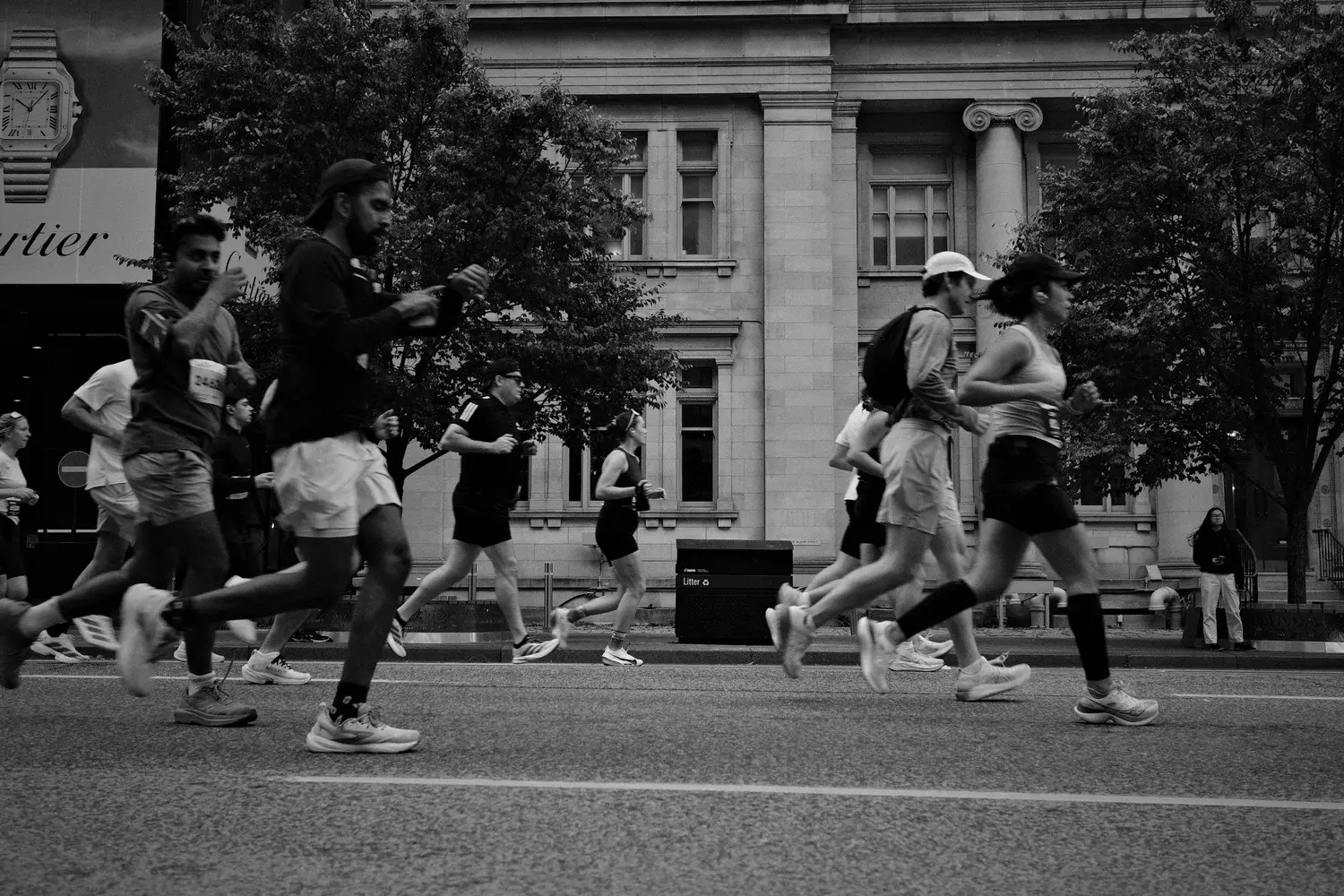
Talk about the event itself (the DJs, the street closures, the 100-meter sprints) ran +51% net. Winners Akinola Raymond and Destiny Scott got a wave of congratulations.
What it means: the people who laced up felt supported. Online reaction and on-the-ground reaction can tell two very different stories.
3. Nike showed up where runners already were
Working with running crews and youth programs paid off. Talk about Nike's youth engagement and community work around the race ran +94% net, and people mentioned the race alongside other late-summer city moments.
What it means: the scrappy, low-polish format earned real credibility with the crowd it was built for.
4. Other Nike news blurred the picture
Overall Nike sentiment in the city ran +19%, but much of that came from Alex Eala's US Open appearances at the Nike NYC store. A steady stream of political "go woke, go broke" comments pulled in the other direction.
There were zero mentions of Mayor Zohran Mamdani.
What it means: the topline number tells you little about the race itself. You have to pull the race out of the citywide Nike conversation to see how it did.
The Discover Difference
A keyword dashboard would likely show 1.4K mentions at +6% net and call the event a mild success.
Discover's clustering found two near-opposite reactions inside that number: a celebrated event at +51% and a housing-crisis critique at -88%, with tennis hype and political noise mixed in. That split is the useful finding.
Your Move.
If you're planning a hyperlocal activation with a cash prize, here are three ways to play it:
Option A: Fund the Community, Not One Person's Rent
The play: Put the same budget toward run clubs, youth programs, or a shared prize pool for local crews.
The trade-off: You lose the shock value that got the race talked about in the first place.
Option B: Keep the Rogue Format
The play: Repeat the street race mechanics: low-barrier sprints, local DJs, and real neighborhood partners.
The trade-off: Street closures mean permits and logistics every time.
Option C: Give the Event Room
The play: Schedule community events away from big moments like the US Open so you can measure them cleanly.
The trade-off: You miss the foot traffic that comes with a citywide event.
About This Report
This report was produced with Tellagence Discover, a Contextual Intelligence platform. Discover clusters large volumes of unstructured conversation into specific, sized themes, so you can see what people mean and not only what they say. For this report, Discover analyzed 1.4K mentions across social networks, news, blogs, forums, and reviews.
Want Discover to run a pulse on your brand's audience? Let's talk.